



 Free Consultation
 Fast Delivery
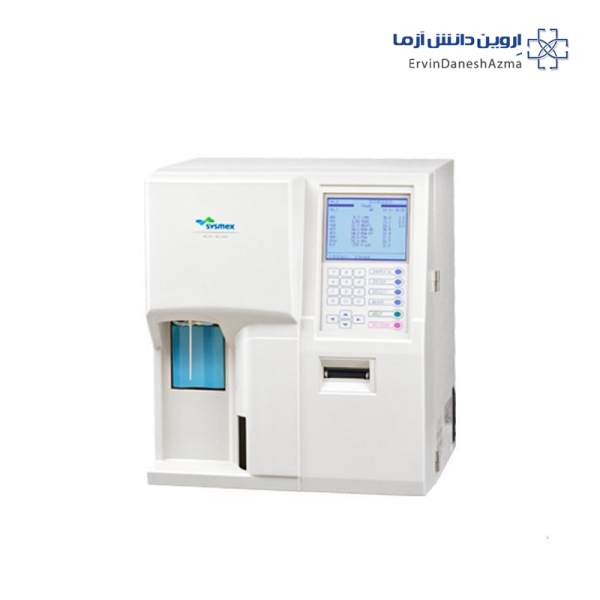
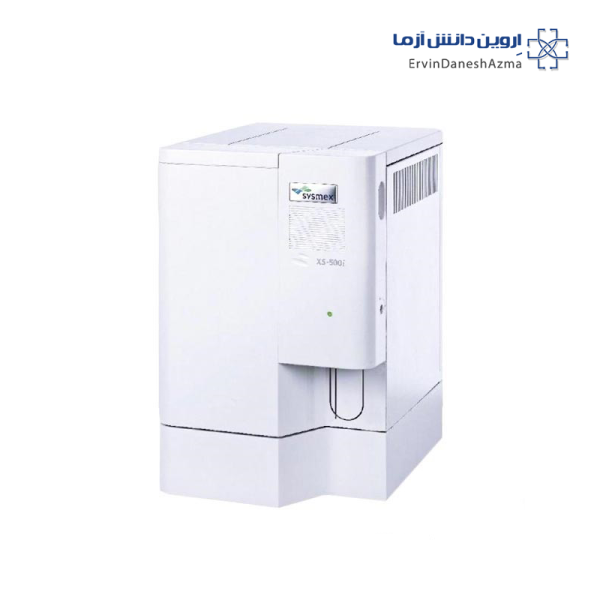
Sysmex XS-500i Fully Differential Refurbished Cell Counter | Sysmex XS-500i Refurbished
Fluorescence flow cytometry can really help you
Fluorescence flow cytometry is used to analyse physiological and chemical properties of cells. It can also be used to analyse other biological particles in urinalysis analysers. It provides:
Information about cell size and structure
Information about a cell’s interior
In flow cytometry, we examine cells and particles while they are flowing through a very narrow flow cell.
First a blood sample is aspirated and proportioned, then diluted to a pre-set ratio and labelled with a proprietary fluorescence marker that binds specifically to nucleic acids.
Next the sample is transported into the flow cell. The sample is illuminated by a semiconductor laser beam, which can separate the cells using three different signals:
forward scattered light (forward scatter or FSC)
side scattered light (side scatter or SSC)
side fluorescence light (side fluorescence or SFL).
The intensity of the forward scatter indicates the cell volume. The side scatter provides information about the cell content, such as nucleus and granules. The side fluorescence indicates the amount of DNA and RNA present in the cell.
Cells with similar physical and chemical properties form a cluster in a graph known as a scattergram.
The principle of fluorescence flow cytometry is used in different analysers for haematology and urinalysis. For blood cell counts we use fluorescence flow cytometry, e.g. for the WBC and differential, for NRBC counting and reticulocyte measurement.
In urinalysis analysers, fluorescence technology is also used for counting bacteria, red blood cells, white blood cells and other elements.
Red blood cells, platelets, haemoglobin and haematocrit
The XS-500i may be compact, but it uses the same globally-renown detection technologies as Sysmex’s larger analysers. And thanks to its absolute counting principle, you don’t need to calibrate the particle counts yourself, which will save you a significant amount of time and effort.
Red blood cells and platelets
For red blood cells and platelets, the XS-500i uses advanced sheath flow impedance technology. This hydrodynamic focusing is more precise than ordinary methods as it eliminates potential errors such as coincidence and recirculation. In practical terms, this lets you spot changes in red blood cell composition in the peripheral blood. This is the essential basis for screening and classifying anaemic forms of disease. And it works even for samples with extremely low or unusually high numbers of red cells and platelets.
Haemoglobin
The XS-series uses Sysmex’s cyanide-free SLS method for analysing haemoglobin. This correlates excellently with the reference method. Since haemoglobin is determined in a dedicated channel, interference with lipids or high concentrations of WBC is minimised.
Haematocrit
The XS-500i measures haematocrit using a precise red blood cell count and volume detection. Using what is known as the ‘cumulative pulse height’ detection method, the pulses and the resulting cell volumes of a defined sample volume are added together to give a direct, extremely accurate haematocrit value.
| Technologies | fluorescence flow cytometry: WBC DIFF, IG DC sheath flow method: RBC, HCT, PLT cyanide-free SLS method: HGB |
| Diagnostic parameters | WBC, RBC, HGB, HCT, MCV, MCH, MCHC, PLT, RDW-SD, RDW-CV, PDW, MPV, P-LCR, PCT, NEUT%, LYMPH%, MONO%, EO%, BASO%, NEUT#, LYMPH#, MONO#, EO#, BASO# |
| Research parameters | IG%, IG#, Other%, Other# |
| Throughput | up to 60 samples/hour |
| Aspiration volume | approx. 20 μL (manual open/closed mode, capillary mode, sampler mode) |
| Data storage | up to 8,000 samples (incl. graphics); up to 5,000 patients’ information; 20 quality control files mpler mode) |
| Quality control | Xbar, Levey-Jennings, XbarM |
| Dimensions/weight | wxhxd [mm]/[kg] 320×503 x413 /approx. 24 |
Reviews
There are no reviews yet.